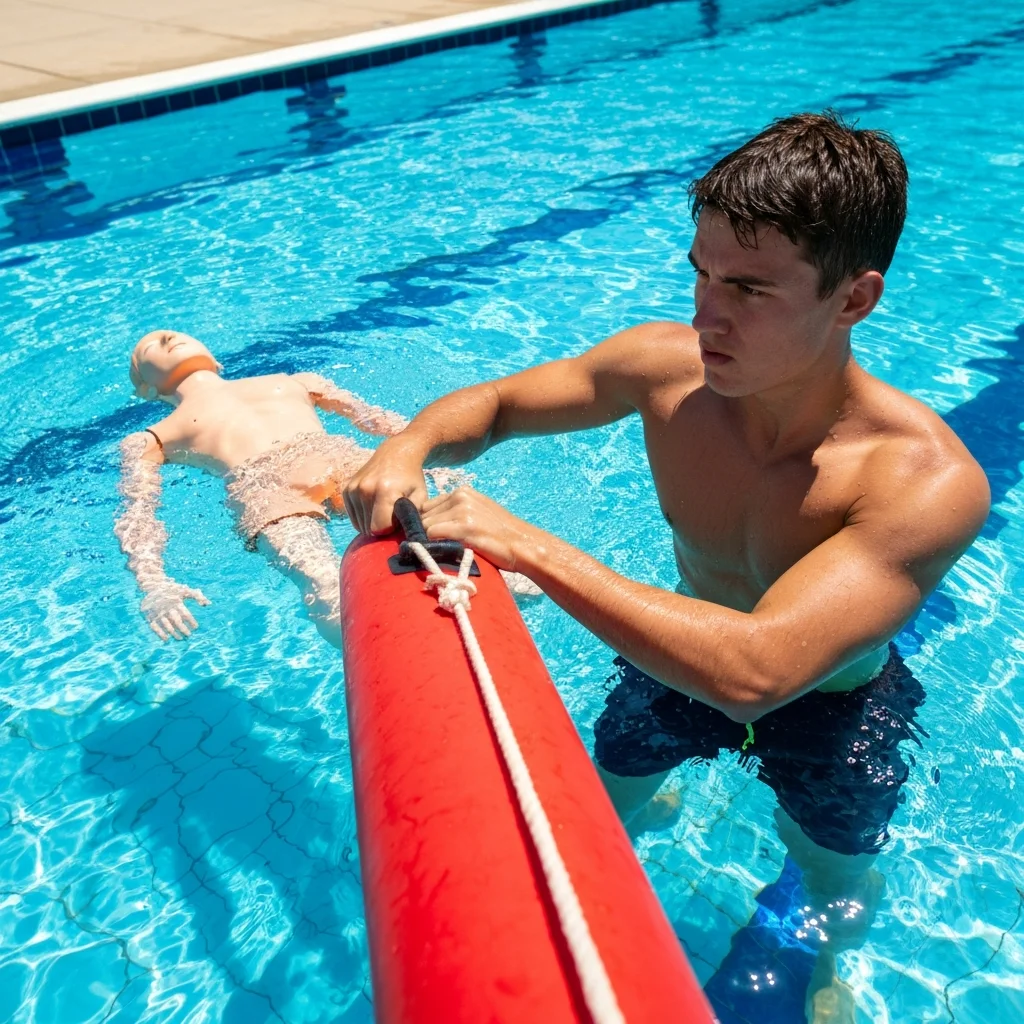
Lifesaving and Lifeguard Courses in Singapore
Lifesaving certification in Singapore is run by the Singapore Life Saving Society (SLSS), the national governing body affiliated with the International Life Saving Federation. If you want to become a swimming instructor, work as a lifeguard, or hold a practical water rescue qualification, the SLSS pathway is what you need. This guide covers the full ladder of awards, how courses actually run, realistic costs, prerequisites, how to register, and what to expect on exam day.
Who needs a lifesaving certificate?
- Swimming instructors. The Bronze Medallion is the de facto minimum for most swim schools, SwimSafer providers, and condominium teaching. It is also a prerequisite for the SG-Coach Level 1 Swimming Programme, Singapore's official coach certification
- Pool lifeguards. Employers at public pools, hotels, clubs, and condominiums generally require a Bronze Medallion plus current first aid and CPR certification
- Competitive swimmers and coaches. Some clubs encourage lifesaving certification as part of their athlete development pathway
- Parents, active swimmers, boaters, and triathletes who want real skills for in-water emergencies, not just theoretical awareness
The SLSS award ladder
SLSS awards are a progression. You do not skip levels. Each award builds on skills from the one below.
- Lifesaving 1, 2, 3 (LS1, LS2, LS3). The foundational ladder. LS1 and LS2 cover basic water rescue skills and swimming fitness. LS3 introduces resuscitation and in-water rescue preparation for the Bronze Medallion. Each stage is 9 training sessions followed by one examination
- Bronze Medallion (BM). The entry-level qualifying award for instructor and lifeguard work. Covers rescue methods, defensive techniques, in-water resuscitation preparation, and practical water incidents. A current CPR qualification is required before you can sit the Bronze Medallion examination. CPR is taken as a separate course
- Bronze Cross. Builds on the Bronze Medallion with more advanced rescue scenarios and higher swimming fitness standards. Relevant for career lifeguards, lifesaving sport athletes, and instructor candidates moving up
- Higher awards and instructor qualifications. For people progressing into SLSS instructor or examiner roles. See the current SLSS Awards Syllabus for the full structure
The SLSS courses page publishes the current syllabus document for download. Fees, dates, and syllabus structure get updated periodically, so check the source for the latest version.
Bronze Medallion: the one most people need
If you are on this page because you want to teach swimming or work as a lifeguard, the Bronze Medallion is the practical target. It is the qualification that unlocks employment at almost every swim school and public pool in Singapore.
- Course fee
- $450 to $650
- set by delivering provider
- Course structure
- 9 sessions + exam
- over several weeks
- CPR requirement
- Separate course
- book early, certificate needed before BM exam
Course structure:
- 9 training sessions over several weeks, covering theory, pool drills, and rescue simulations
- One Bronze Medallion examination covering practical rescue scenarios, swimming fitness tests, and theory
- A current CPR qualification is required before the Bronze Medallion examination. CPR is taken as its own separate course, usually SLSS CPR, BCLS + AED, or another SRFAC-accredited equivalent. Book CPR early because you will need the certificate in hand before the BM exam
Prerequisites:
- Ability to swim at least 400 metres continuously in reasonable time
- Comfort treading water for a sustained period (usually 2 minutes or longer depending on scenario)
- Confidence underwater for surface dives and submerged rescue simulations
- Minimum age requirements as published by SLSS or the delivering provider
Delivery and cost. SLSS runs Bronze Medallion courses directly, usually at ActiveSG swimming pools. Courses are also delivered by SLSS Affiliate and Associate Members across Singapore. Fees are set by the delivering organisation and not fixed centrally. Budget roughly $450 to $650 for the Bronze Medallion course. The CPR qualification is booked and paid separately, usually through SLSS or another SRFAC-accredited provider. Confirm with your chosen provider before registering.
Lifesaving 1, 2, and 3: the route in
Most people going for the Bronze Medallion do not come in cold. You work through Lifesaving 1 to 3 first. Each stage teaches a set of in-water skills, rescue techniques, and theory, with a written or practical exam at the end.
- Lifesaving 1: introduction to water safety, basic reaching and throwing rescues, elementary self-rescue and survival skills
- Lifesaving 2: wading and accompanied rescues, escape techniques from panicked swimmers, basic resuscitation awareness
- Lifesaving 3: swimming rescues with aids, defensive techniques, initial resuscitation skills, preparation for the Bronze Medallion
Each stage is 9 training sessions followed by an examination, similar to the Bronze Medallion. Schools and lifesaving clubs usually run LS1 for teenagers and younger adults first. If you are a working adult considering the Bronze Medallion directly, ask the provider whether they will accept you without the LS1 to 3 sequence. Some will, subject to a swimming assessment.
First aid and CPR: the parallel track
Employers in Singapore hiring swim instructors or lifeguards also want a current first aid qualification. SLSS itself delivers the Singapore Resuscitation and First Aid Council (SRFAC) accredited courses out of their training centre at 100 Tyrwhitt Road.
Injury management, medical emergencies, resuscitation, and AED use. 9am to 6pm each day.
Basic Cardiac Life Support with AED. CPR for adults and infants, choking relief, AED use. SRFAC accredited, two-year validity. Most employers recognise this version.
Adult cardiac arrest recognition, CPR, and AED use. Shortest option but narrower scope than BCLS + AED.
If you are planning to work as a swim instructor or lifeguard, the BCLS + AED qualification is the most useful. It is the version most employers and condominium property managers recognise. For the current schedule and how to register, see the SLSS professional courses page.
Singapore Red Cross, St John Ambulance, and a range of commercial training centres also run first aid and CPR courses if the SLSS schedule does not fit yours. Confirm with your intended employer which specific qualification they will accept before paying.
How to actually register
The registration process is simple but not always obvious.
- For Lifesaving 1/2/3 or Bronze Medallion: SLSS runs these directly at ActiveSG pools. Alternatively, contact an SLSS Affiliate or Associate Member who delivers the course you want. The member organisation will handle bookings and arrange the examination with SLSS
- For first aid, CPR, or AED courses: register directly with SLSS through the "Express Interest" form on the professional courses page, or book with another SRFAC-accredited provider
- For examiner or instructor-level courses: download booking forms from the SLSS website and submit directly
Lead time varies. In-house SLSS courses usually have intakes each month, but popular dates fill fast. Plan 4 to 8 weeks ahead, especially before school holiday periods when demand spikes.
Swimming fitness: the real gatekeeper
More people struggle at the swimming fitness standard than at the rescue technique content. The typical Bronze Medallion candidate needs to comfortably:
- Swim 400 metres continuously in freestyle or breaststroke at a steady pace
- Tread water for 2 minutes or longer, sometimes with hands out of the water
- Perform surface dives to pool bottom and retrieve a submerged object
- Swim with a rescue aid and a simulated casualty without losing position
If you cannot already swim 400 metres without stopping, do not sign up yet. Train in a public pool for a few weeks first. The course teaches rescue technique, not swimming fitness. Candidates who arrive unfit either fail the practical or slow the group down.
What the examination day looks like
Bronze Medallion exam day combines practical rescue scenarios in the pool with a written theory paper. A rough sketch of the day:
- Morning: warm-up swim, swimming fitness assessment (timed 400m or equivalent), defensive technique demonstrations
- Midday: practical rescue scenarios, one at a time, watched by the examiner. Scenarios usually involve identifying a swimmer in distress, selecting an appropriate rescue, entering the water safely, effecting the rescue, and bringing the casualty to safety
- Afternoon: CPR examination (if combined with the BM day). Usually practical on a manikin plus a short theory component
- End of day: written theory paper on water safety principles, rescue priorities, legal aspects, and resuscitation knowledge
Candidates who fail usually fail on one specific rescue scenario rather than the overall day. Re-examination for the failed component is typically possible within a few weeks at modest additional cost. Ask your provider about their re-examination policy before the day.
What new candidates get wrong
- Arriving unfit. Thinking the course will build fitness. It will not. Get your 400m swim comfortable before day one
- Treating CPR as an afterthought. The SLSS CPR component requires precise technique. Practise the compression rhythm and rescue breaths repeatedly, not just the day before
- Rushing into the water. Examiners watch for risk assessment. Walking calmly to the edge, scanning the scene, and picking the right rescue method earns points. Panicked sprinting costs them
- Skipping theory. A strong practical cannot fully recover a failed theory paper. The theory material is not difficult, but it does require reading
- Letting the certification lapse. Employers need a current certificate. Know your renewal date and book the re-assessment before it expires
Career paths after Bronze Medallion
The Bronze Medallion opens four broad directions.
- Swimming instructor. Combine Bronze Medallion with a teaching qualification (Austswim, STA, or SG-Coach Level 1), plus a valid first aid certificate, and most swim schools will hire you. See our swimming instructor course guide for the full pathway
- Pool lifeguard. Employers at public pools, condominiums, hotels, and clubs hire lifeguards holding a Bronze Medallion, first aid, and CPR qualification. Some larger employers also require additional internal assessments
- Lifesaving sport. Competitive lifesaving is a recognised sport with national and international competition. SLSS coordinates training and events for athletes
- Beach and open water work. For open water lifeguarding, additional awards and assessments apply. The Bronze Medallion is a foundation rather than a complete qualification for beach environments
Renewal and keeping your certificate current
Lifesaving certifications are time-limited. Validity varies by award, and re-assessment is typically required to continue practising. First aid certifications (SFA, BCLS + AED) are valid for two years under SRFAC. Plan the renewal at least a month before expiry, because course dates are not always available on demand. An expired certificate means an employer or condominium management will not let you work until the replacement is issued.
Most working swim instructors and lifeguards treat their renewals the same way they treat driving licence renewals. A routine, non-negotiable task that must happen on time.
The honest summary
SLSS lifesaving certification is a well-defined ladder with a clear target for most people: the Bronze Medallion, combined with a BCLS + AED first aid qualification. Get those two, and you hold the credentials to teach swimming, work as a pool lifeguard, or own a practical skill set for water safety.
The course content is not difficult for anyone with reasonable swimming fitness and a willingness to read. The gatekeeper is the 400m continuous swim and the confidence to handle practical rescue scenarios under an examiner's eye. Prepare the swimming fitness, register through SLSS or an Affiliate member, and budget separately: roughly $450 to $650 for the Bronze Medallion course, plus $145 for BCLS + AED, plus the SLSS CPR course if taken as a standalone. The time investment is roughly 10 to 12 weeks from signing up to holding a current Bronze Medallion and first aid qualification.
For the current schedule, fees, and registration forms, always check the SLSS courses page directly. Fees and dates on third-party sites go out of date quickly. The SLSS site is the source of truth.
If you are using this qualification to build a career, read our guide to becoming a swimming instructor in Singapore next. It explains how the Bronze Medallion fits into the full instructor pathway, what else you need, and what you can earn.