Kitesurfing in Singapore: Spots, Schools, and How to Start
Kitesurfing is one of the more visible water sports in Singapore. On any windy weekend at East Coast Park, you can watch a dozen kites working the wind offshore. What you cannot see from the beach is the structure behind it: a small but active kitesurfing community, a handful of IKO-certified schools, and a wind season that rewards patience with regular conditions from around December through March.
This guide covers where people actually kite in Singapore, when the wind is reliable, what a lesson looks like, and how to get started. Facts come from JC Kitesurf (IKO-certified school operating at East Coast) and Unplug Kitesurf's Singapore destination guide.
What kitesurfing is
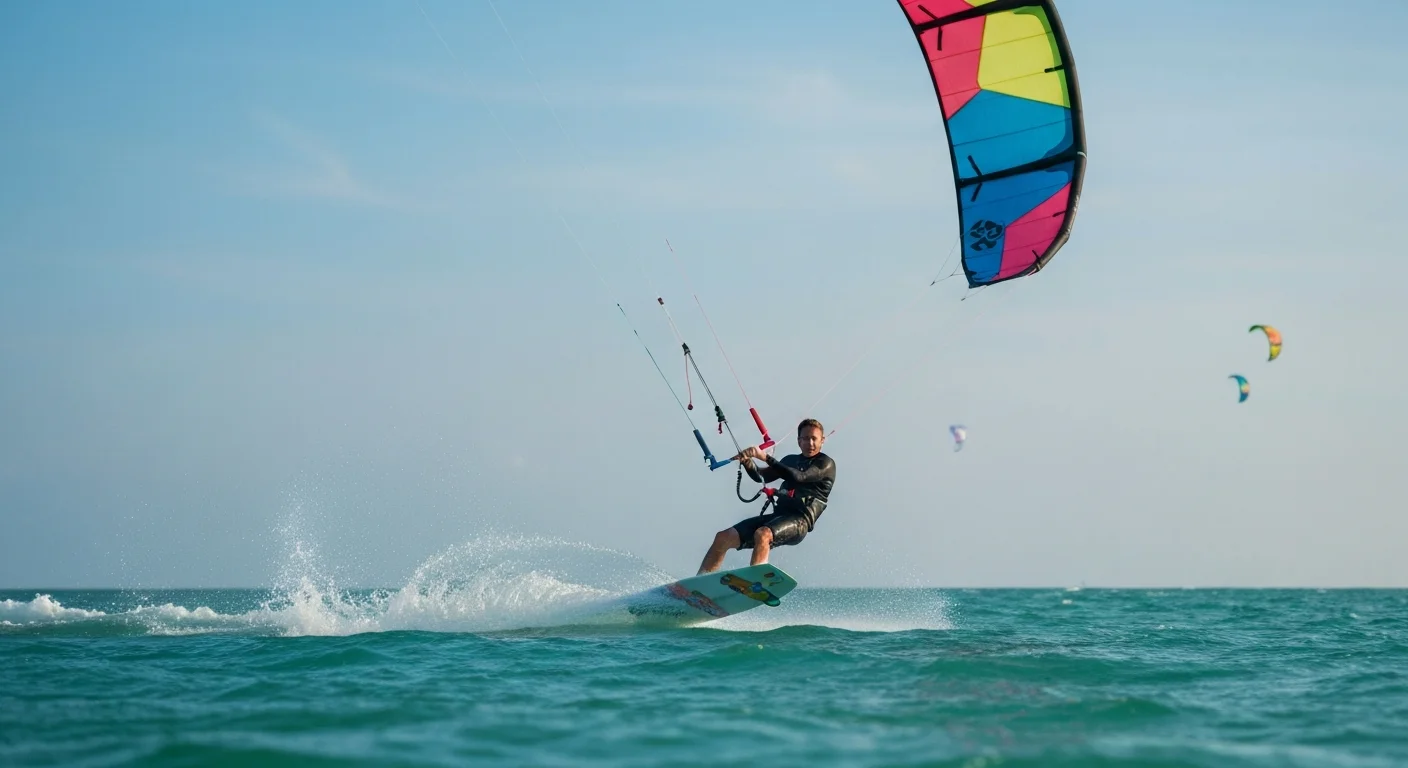
Kitesurfing uses a large curved kite flown on four or five control lines to pull a rider across the water on a board. The rider holds a bar that controls the kite. Steering the kite controls direction and power. The board is similar to a wakeboard or a short twin-tip; some riders progress to hydrofoil boards (kitefoiling), which ride on a wing below the water and sit slightly above the surface at speed.
The sport looks intimidating. In reality, most people with reasonable fitness and a tolerance for frustration can progress from first lesson to independent riding in 8 to 12 hours of instruction, spread over several days.
Where people kite in Singapore
Singapore has three viable kitesurfing spots, all on the east side of the island where the prevailing winds work best.
East Coast Park (ECP)
The main kitesurfing spot in Singapore. The stretch of beach from East Coast Service Road 2 toward the ECP Breakwater is where most kiters launch. Conditions are classified as beginner-friendly with choppy water. Waves are typically small, the beach is wide enough for launching, and the wind comes off the sea cleanly.
Two IKO-certified schools operate at East Coast: JC Kitesurf and Singapore Kitesurfing (E Coast Park Service Rd).
Changi Beach / Stinky Bay
Changi Beach offers intermediate conditions with more chop than East Coast. "Stinky Bay", a nickname some kiters use for the Changi area, is classified as beginner, shallow and flat. That makes it a quieter alternative to the busier East Coast. Constant Wind, based at Changi Coast Walk, is the main school operating here.
Regional day trips
Once qualified, many Singapore kiters cross the causeway or ferry to Bintan for weekend sessions at spots like Nirwana Gardens or Trikora Beach, where the conditions are less congested and the winds can be stronger. The Malaysian east coast (Desaru, Kota Tinggi area) offers similar options. These are not beginner trips. Do them after you have learned in Singapore.
Wind seasons
Singapore's equatorial position means the wind is not consistent year-round, and planning lessons around the right season matters.
- Northeast monsoon (roughly December to March): the best kitesurfing season. Winds blow consistently from the northeast, ideal for East Coast. This is when most lessons and regular sessions happen
- Inter-monsoon (April to May, October to November): variable winds, not reliable enough for planning trips but occasional good days
- Southwest monsoon (June to September): weaker winds and often too light for kitesurfing. Some kiters switch to kitefoiling during this season because foiling works in lighter winds
If you want to start learning, book lessons between December and March. Outside that window, expect cancelled or postponed sessions when the wind does not cooperate. Schools in Singapore know how to work around weather, but they cannot create wind.
Schools and instructors
The International Kiteboarding Organization (IKO) is the main certification body, and most established Singapore schools follow the IKO syllabus. The instructors below are known in the community and have verifiable credentials.
JC Kitesurf (East Coast)
Run by Jackson Chua, an IKO Level 3 instructor and Level 1 Kitefoiling Coach. Kitesurfing since 2013, kitefoiling since 2017. Completed the IKO Teaching Children Course and has coached a Youth Olympic Games qualifier. JC Kitesurf runs individual and small-group lessons at East Coast.
- Contact: +65 9877 3280 / kitesurfing.sg@gmail.com
- Website: jckitesurf.com
Singapore Kitesurfing (East Coast)
Operating at E Coast Park Service Road. Lessons priced around S$110 per hour. See the school's own site for current packages and instructor details.
Singapore Kiteboarding (central Singapore school)
Based at 29 MacKerrow Road. Rates around S$70 per hour, with mixed student reviews (4.5/5 across 8 reviews on Unplug at time of publication). Location is further from the launch spots, so factor in travel.
Constant Wind (Changi)
Based at Changi Coast Walk. Offers kitesurfing and other watersport courses. Rates around S$75 per hour. A well-established operation with strong community reviews.
Before committing to a package, verify the school's IKO certification status on the IKO directory and ask to see the instructor's certification card. Kitesurfing is a sport where safety depends on instructor quality.
How to learn
A standard IKO learn-to-kitesurf progression looks like this:
- Level 1: kite control on land. You fly a small trainer kite on the beach, learn the wind window, practise launching and landing. Usually 2 to 3 hours.
- Level 2: body dragging. You go into shallow water with the kite pulling you, learn to control direction without a board, and practise self-rescue. Usually 3 to 4 hours.
- Level 3: water start. You put the board on and learn to get up on the water with the kite generating the pull. This is where most people take the longest. Usually 3 to 5 hours.
- Continued progression. Once up, you learn to ride upwind, turn, jump, and eventually attempt tricks. This phase has no set duration and varies widely by person.
Total instruction time to independent riding is typically 8 to 12 hours, spread over 3 to 5 lesson days. Some people are quicker. Some spend 15 to 20 hours before riding cleanly. None of this is unusual.
What it costs
Expect the following budget to go from zero to independent rider:
- Lessons (8 to 12 hours): approximately S$800 to S$1,500 depending on school and package
- First gear kit (used): S$1,000 to S$2,000 for a complete second-hand setup (kite, bar, lines, board, harness, life vest)
- First gear kit (new): S$3,000 to S$5,000+ for a new complete setup
- Ongoing costs: no venue fees for East Coast / Changi. Occasional repairs and replacements, kite line replacements ~S$100 to S$300
Buying gear too early is a common beginner mistake. Take lessons first with the school's gear, then talk to your instructor or the community about what setup suits your weight and skill level. Most schools have used gear from former students that sells reasonably.
Gear and equipment
A complete kitesurfing kit includes:
- Kite. Size ranges typically 7m² to 15m². Lighter winds need bigger kites. Most riders own 2 or 3 kites to cover the full wind range
- Control bar and lines. The interface between you and the kite. Includes the safety release
- Board. Typically a twin-tip for freestyle/freeride. Directional boards for wave riding. Foil boards for kitefoiling
- Harness. Waist or seat harness that takes the pull of the kite off your arms
- Life vest. Impact vest or regulation PFD depending on venue rules
- Helmet. Recommended especially for beginners
- Leash. Attaches the bar to you via the harness so you do not lose the kite
Safety and etiquette
Kitesurfing is a power sport with real risk. Common beginner injuries include rotator cuff strains from mishandling the kite, cuts from line wraps, and impact injuries from hitting the water wrong. Serious incidents are rare but do happen, including getting lofted by unexpected gusts.
Rules that matter:
- Never ride alone. Have someone on the beach who can respond if your kite comes down
- Check the weather forecast before rigging up. Thunderstorms and lightning are non-negotiable. Kite lines conduct electricity
- Respect right-of-way. Incoming kites (starboard tack) have right of way. Upwind kite goes high, downwind kite goes low when passing
- Stay clear of swimmers and boats. Lines and kites are hazards to both
- Know your self-rescue. Every IKO-certified course covers this. Practise it before you need it
The Kitesurfing Association of Singapore (KAS) is the local community body and a useful resource for current conditions, events, and the wider community.
Honest summary
Kitesurfing in Singapore is not year-round. The northeast monsoon (December to March) is when the sport actually works. If you want to start, book lessons in that window with an IKO-certified instructor at East Coast. Plan on 8 to 12 hours of instruction across 3 to 5 lesson days before you are riding independently.
Budget S$800 to S$1,500 for lessons and another S$1,000 to S$2,000 for used gear once you are ready to buy your own. The community is small, the instructors are accessible, and the conditions at East Coast are beginner-friendly when the wind is blowing.
For other East Coast water sports, see our wakeboarding guide. For open water work more broadly, see the open water swimming guide.