Swimming Workouts: Structured Plans for Every Level
Most recreational swimmers do the same thing every session: get in, swim laps at a steady pace, get out. It works for basic fitness, but structured workouts produce better results in less time. They build speed, endurance, and technique in ways that monotonous lapping doesn't.
Below are workout templates for three levels. All workouts are designed for a 50-metre pool (standard at Singapore's ActiveSG swimming complexes). If you're in a 25-metre pool, double the number of lengths.
How to Read These Workouts
- 4 x 50m means swim 50 metres, four times
- @1:30 means start each repeat on a 1 minute 30 second cycle (swim + rest within that time)
- RI 20s means rest interval of 20 seconds between each repeat
- Descend means each repeat should be faster than the previous one
- Build means start slow and get faster within a single length
Beginner (30 minutes, ~800m)
For swimmers who can swim 50 metres without stopping but don't have much endurance yet.
Warm-up (200m)
- 4 x 50m easy freestyle, RI 20s. Focus on smooth breathing and relaxed strokes.
Main set (400m)
- 4 x 25m freestyle, RI 15s. Moderate pace.
- 4 x 25m with kickboard, RI 15s. Freestyle kick, face in water, breathe to the side.
- 4 x 50m freestyle, RI 30s. Steady pace. Count your strokes per length and try to keep the number consistent.
Cool-down (200m)
- 4 x 50m easy choice stroke, RI 20s. Swim whichever stroke feels most relaxed.
Focus this session on: consistent breathing (exhale underwater, inhale to the side) and relaxed recovery arms.
Intermediate (45 minutes, ~1,500m)
For swimmers who can swim 200 metres continuously and are comfortable with freestyle and at least one other stroke.
Warm-up (300m)
- 200m easy freestyle
- 4 x 25m drill (alternate: catch-up freestyle, fingertip drag), RI 10s
Main set 1: Endurance (600m)
- 6 x 100m freestyle @2:30. Aim for even splits (same pace for each 100). If you can't make the interval, add 15 seconds.
Main set 2: Speed (200m)
- 8 x 25m freestyle, RI 20s. Descend 1-4 (each one faster), then repeat. The last 25m of each set of 4 should be near maximum effort.
Main set 3: Kick (200m)
- 4 x 50m kick (with or without board), RI 15s. Alternate freestyle kick and breaststroke kick if you can do both.
Cool-down (200m)
- 200m easy backstroke or breaststroke
Focus this session on: pacing (keeping each 100m split within 5 seconds of each other) and strong, controlled kick.
Advanced (60 minutes, ~2,500m)
For swimmers who can swim 400 metres continuously and are comfortable with all four strokes.
Warm-up (400m)
- 200m easy freestyle
- 100m individual medley (25m each: butterfly, backstroke, breaststroke, freestyle)
- 4 x 25m build (start slow, finish fast), RI 10s
Main set 1: Threshold (800m)
- 8 x 100m freestyle @1:50 (adjust interval to give you 10-15 seconds rest). These should feel comfortably hard: you can sustain the pace but you're working.
Main set 2: Speed (400m)
- 8 x 50m @1:15, alternating fast/easy. Odd numbers (1, 3, 5, 7) at 85-90% effort. Even numbers (2, 4, 6, 8) at easy recovery pace.
Main set 3: Mixed stroke (400m)
- 4 x 100m IM (individual medley: 25m fly, 25m back, 25m breast, 25m free), RI 20s. Focus on smooth transitions between strokes.
Main set 4: Kick (200m)
- 4 x 50m dolphin kick on back (arms streamlined overhead), RI 15s
Cool-down (300m)
- 300m easy choice. Mix strokes, keep it relaxed.
Focus this session on: holding pace across the threshold set (don't go out too fast on the first 100) and clean IM transitions.
Tips for Better Workouts
- Use a pace clock. Every public pool in Singapore has a pace clock on the wall. Learning to read it (and send off on intervals) transforms your training.
- Count your strokes. Stroke count per length is the simplest measure of efficiency. Fewer strokes at the same speed means better technique.
- Warm up properly. The first 200 to 400 metres should be easy. Jumping straight into hard sets increases injury risk and produces worse times.
- Vary your training. Don't do the same workout twice in a row. Alternate between endurance, speed, technique, and mixed sessions.
- Track progress. Record your times for key distances (100m, 200m, 400m) once a month. Progress in swimming is measured in seconds, not minutes, so you need data to see it.
- Rest matters. If you swim 5 days a week, make at least one session technique-focused (drills and easy swimming). Recovery is when your body adapts.
Equipment That Helps
- Pull buoy ($10-20): floats between your legs, isolates your upper body pull. Good for building arm strength and feeling your catch.
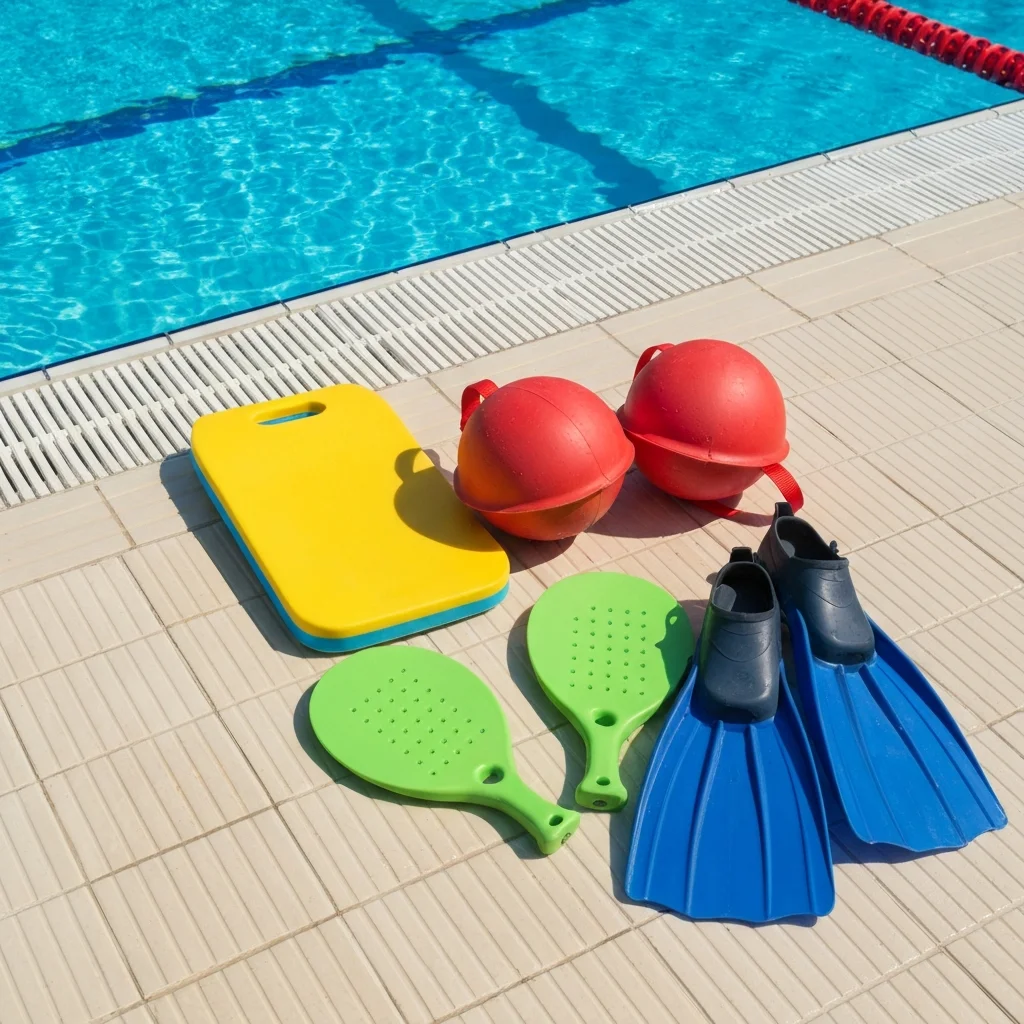
- Kickboard ($10-15): isolates your kick. Essential for kick sets.
- Paddles ($15-25): increase the surface area of your hands, building pull strength. Use sparingly as they can strain shoulders if overused.
- Fins ($30-50): add propulsion and help you focus on body position and kick technique at higher speeds. Short fins are better for technique; long fins are better for ankle flexibility.
For technique guidance on specific strokes, see our guides on freestyle, breaststroke, backstroke, and butterfly.
Find your nearest pool at SwimmingComplex.com or get coaching support at SingaporeSwimming.com.