Swimming vs Gym: Which Is Better for Fitness?
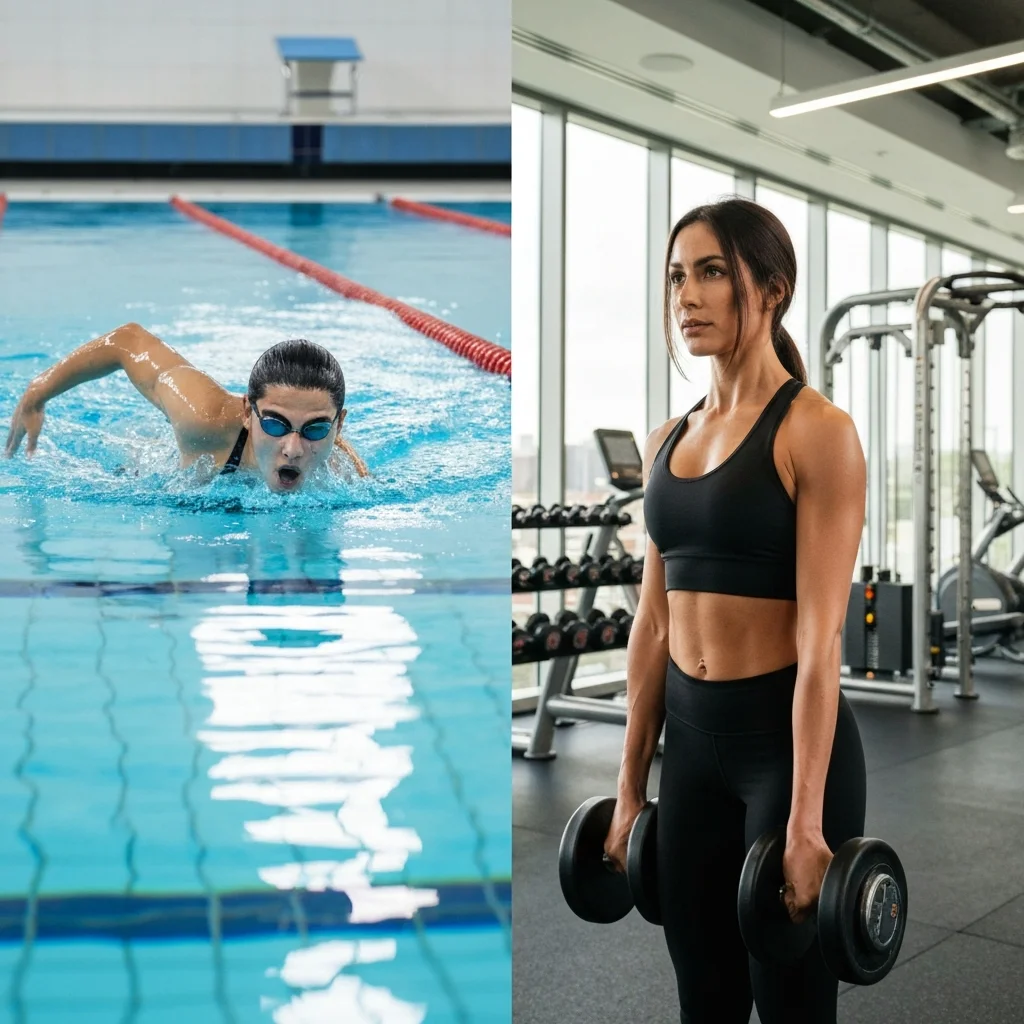
This is a site about swimming, so you'd expect us to say swimming wins. We'll try to be honest instead. Both swimming and gym training work. The question is which one fits your goals, your body, and your life in Singapore better.
Calorie Burn
A 70kg person swimming moderate freestyle for 30 minutes burns roughly 250 calories. The same person lifting weights for 30 minutes burns about 130 to 220 calories (depending on intensity and rest periods). Running on a treadmill at moderate pace burns around 300 calories.
Swimming sits between weights and running for calorie burn. But the gap narrows when you factor in EPOC (excess post-exercise oxygen consumption) -- resistance training creates a longer afterburn effect, meaning your body continues to burn slightly more calories for hours after lifting. Swimming doesn't produce as much EPOC because the water keeps your body cool.
Verdict: roughly equal over a full day for most people. Neither has a dramatic advantage.
Muscle Building
The gym wins here, clearly. Progressive overload -- adding weight to a barbell over time -- is the most effective way to build muscle mass. Swimming builds lean muscle and endurance, but you can't progressively increase the resistance the way you can with weights.
Swimmers develop toned shoulders, back, and core. Gym lifters can target specific muscles and add mass more efficiently. If your goal is visible muscle growth or strength for a specific sport, the gym is the better tool.
That said, swimming builds functional strength across the entire body. The water resists every movement in every direction. Many gym exercises only work through one plane of motion.
Verdict: gym for muscle mass and targeted strength. Swimming for all-round functional fitness.
Joint Impact
This is where swimming has a genuine advantage. Water supports about 90% of your body weight, which means your joints, spine, and connective tissue take almost no impact. Running, jumping, and even some gym exercises load the joints repeatedly.
For people with arthritis, back problems, knee injuries, or anyone over 50 with joint concerns, swimming lets you get a proper workout without aggravating existing issues. Physiotherapists routinely prescribe pool exercise for rehabilitation.
The gym can be low-impact too -- cycling machines, cable exercises, and swimming-focused machines exist -- but the default gym workout (squats, deadlifts, running) puts load on joints in a way swimming doesn't.
Verdict: swimming wins for anyone with joint concerns or injury history.
Cardiovascular Fitness
Both are effective. Swimming trains the cardiovascular system and improves lung capacity. So does a treadmill or rowing machine. The British Journal of Sports Medicine study (2016) found swimmers had a 28% lower risk of early death -- comparable to runners.
One difference: swimming forces controlled breathing. You can't breathe whenever you want, so your respiratory system adapts. Some runners and cyclists find that adding swimming improves their breathing efficiency in other sports.
Verdict: similar outcomes. Swimming adds a breathing discipline component that gym cardio doesn't.
Flexibility
Swimming strokes involve reaching, rotating, and extending through a full range of motion. Over time, regular swimmers become more flexible, particularly in the shoulders, hips, and ankles. Backstroke in particular opens up the chest and counters the forward hunch of desk work.
Gym training can improve flexibility if you include stretching or mobility work, but most gym-goers don't. Weight training through a limited range of motion can actually reduce flexibility if not balanced with stretching.
Verdict: swimming builds flexibility naturally. Gym requires deliberate effort to match.
Cost in Singapore
This comparison is lopsided in Singapore:
| Swimming | Gym | |
|---|---|---|
| Entry cost | $1 per visit (ActiveSG pool) | $80 to $200+ per month (gym membership) |
| Annual cost | $150 to $365 (swimming 3-7x/week) | $960 to $2,400+ |
| Equipment needed | Swimsuit ($30-60), goggles ($15-40) | Shoes ($80-200), clothing, possibly gloves/belt |
| Initial investment | Under $100 | $200+ plus first month |
ActiveSG's $1 pool entry makes swimming absurdly affordable compared to almost any gym in Singapore. Even the cheapest gyms (ActiveSG Gym at $2.50 per entry) cost more per session. Budget gym memberships start around $40 to $60 per month; commercial gyms like Fitness First or Virgin Active run $100 to $200+.
Verdict: swimming is far cheaper in Singapore. Not even close.
Convenience
Gyms win on scheduling flexibility. Most commercial gyms are open 24 hours. Public pools close by 9:30pm, close on Mondays, and require booking through the ActiveSG app. Popular time slots fill up fast.
On the other hand, Singapore has 25+ public pools spread across the island. For most residents, there's a pool within a 10-minute bus ride. Gym density is comparable in central areas but thinner in heartland neighbourhoods.
The wet factor is a practical consideration. Swimming means changing, showering, drying hair, dealing with chlorine. A gym session can be done in work clothes with a quick change. Swimming takes more time door-to-door for the same workout duration.
Verdict: gym is more convenient for most schedules. Swimming adds overhead.
Mental Health
Both exercise types reduce stress, anxiety, and depression. The evidence is consistent across all forms of exercise. But swimmers often report a specific quality: the meditative aspect of being in water, hearing only your own breathing, and falling into a rhythm that quiets the mind. It's hard to check your phone while swimming.
Gym environments vary. Some people find them motivating (music, energy, social). Others find them stressful (crowded, loud, self-conscious about form or appearance). Pools tend to be more neutral -- everyone looks roughly the same in a swimsuit.
Verdict: personal preference. Both work. Swimming offers a uniquely disconnected experience.
Which Should You Choose?
Rather than declaring a winner, here's when each makes more sense:
Choose swimming if:
- You have joint issues, chronic pain, or are recovering from injury
- You're over 50 and want sustainable, low-impact exercise
- Budget matters and you want the cheapest way to stay fit
- You want a full-body workout without needing to learn equipment
- You're looking for stress relief and mental quiet
Choose the gym if:
- Building muscle mass or targeted strength is your primary goal
- You need schedule flexibility (late nights, early mornings outside pool hours)
- You want to track precise numbers (weight, reps, progressive overload)
- You prefer variety in your routine (different machines, classes, free weights)
Do both if you can. They complement each other well. Swimming on rest days from lifting keeps your cardio up without stressing joints. Strength training improves your power in the pool. Many serious swimmers do gym work alongside pool sessions.
For pool locations near you, visit SwimmingComplex.com. For structured swimming workouts, see our workout plans. For more on the health benefits of swimming, read our benefits guide.