Swimming Competitions in Singapore
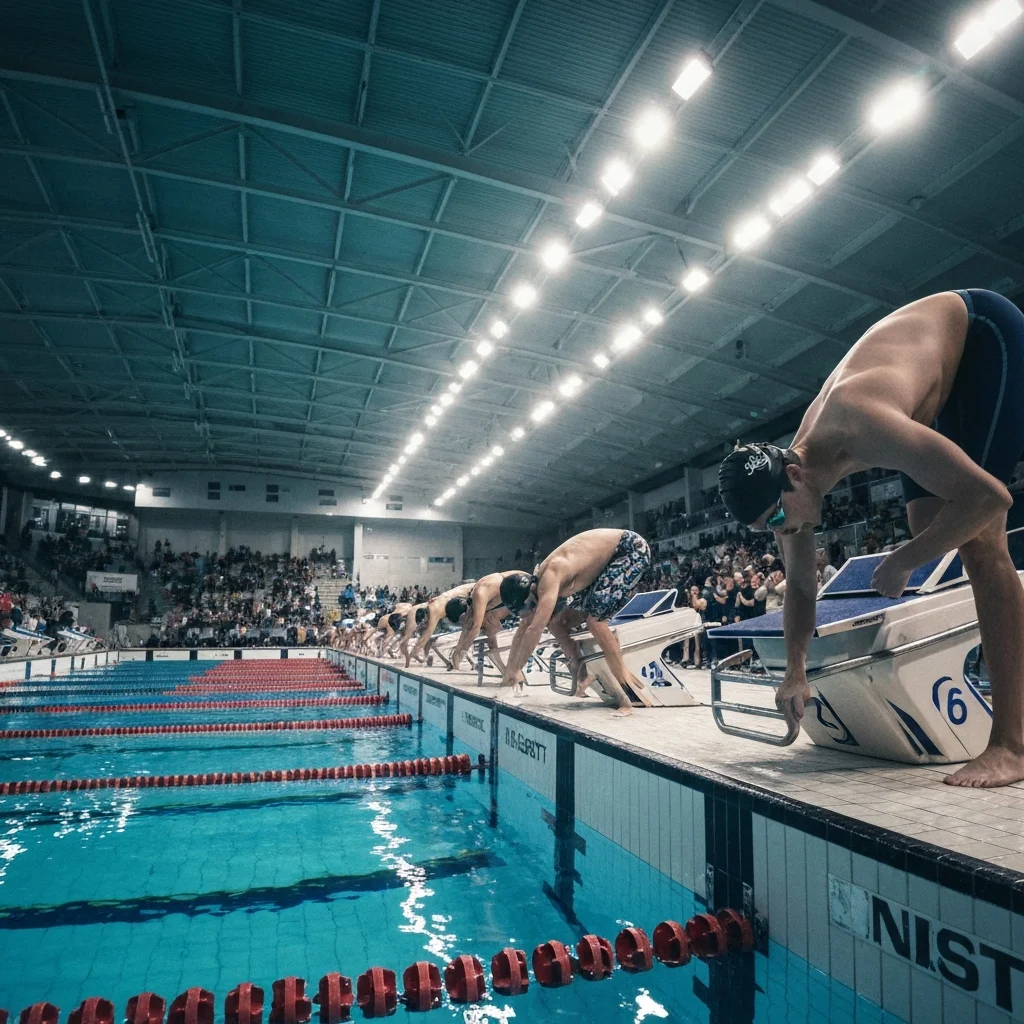
Singapore's competitive swimming calendar runs year-round, with events ranging from casual club time trials to national championships. If you or your child swims with a club or squad, competitions are part of the landscape. Here's how it all fits together.
Types of Competitions
Club meets and time trials
The entry point for most swimmers. Individual clubs or groups of clubs organise meets every few months, usually at public pools. Electronic timing, official results, but a relaxed atmosphere. No qualifying times needed -- you just enter.
These are useful for getting comfortable with the race environment: marshalling, heat sheets, dive starts, and swimming under a clock.
SNAG (Singapore National Age Group) Championships
The main age-group competition in Singapore, run by Singapore Aquatics (the national governing body, formerly known as the Singapore Swimming Association). Held annually, usually in the second quarter.
- Age groups: 8 and under through to 17-18, plus Open
- Events: all four strokes at 50m, 100m, and 200m, plus 200m and 400m IM, distance freestyle
- Qualifying times: required. Your club submits your times from recognised meets. Times must be achieved within the qualifying period (usually the preceding 12 months).
- Venue: typically OCBC Aquatic Centre (Kallang)
SNAG is the competition most club swimmers work toward. Achieving qualifying times is a genuine benchmark of progress.
National Swimming Championships
Singapore's premier open-age competition. Faster qualifying times than SNAG. This is where national squad swimmers compete and national records are set. Also held at OCBC Aquatic Centre.
National School Games
Swimming is part of the National School Games programme, with competitions for primary and secondary schools. Selection is typically handled by the school's PE department or swim team. Events are divided into age divisions matching school levels.
Masters meets
For adults aged 25 and above (some programmes from 18). Organised by Singapore Masters Swimming, typically 2 to 3 times per year. No qualifying times -- all registered masters swimmers can enter. See our masters swimming guide for details.
Open water events
Growing in popularity. Events include the Swimbotics Open Water Series and various triathlon swim legs. Distances range from 750m to 5km. See our open water swimming guide.
Annual Calendar (Typical Year)
Exact dates shift each year, but the general pattern is consistent:
| Period | Events |
|---|---|
| January - March | Club meets and time trials (qualifying period for SNAG). Schools training ramps up for National School Games. |
| March - April | National School Games swimming heats and finals. |
| April - June | SNAG Championships (the main event of the calendar). Various club invitational meets. |
| June - August | Mid-year break meets and development competitions. Some swimmers compete regionally (Malaysia, Thailand, Indonesia). |
| September - October | National Swimming Championships. Masters meets. Open water events. |
| November - December | End-of-year invitational meets. Training camp season. Preparation for the next qualifying cycle. |
How to Enter
Club-level meets
Your coach or club administrator handles entries. You pick which events you want to swim, they submit the entry form and your seed times. Entry fees are typically $5 to $15 per event.
SNAG and national competitions
Entries go through your club. Individual entries are not accepted -- you must be affiliated with a registered club or swim school. Your club submits qualifying times achieved at recognised meets.
Masters meets
Individual entries accepted through Singapore Masters Swimming. Register as a member, then enter the events you want to swim. No qualifying times needed.
What to Expect on Race Day
If you've never been to a swim meet, here's the basic flow:
- Arrive early. Check in, find your team area, locate the warm-up pool and marshalling area.
- Warm-up. Most meets allocate warm-up time before racing starts. Use it -- cold muscles and a stiff stroke are a bad combination.
- Marshalling. When your event is called, report to the marshalling area. You'll be assigned a heat and lane. At bigger meets, this runs on a tight schedule.
- Behind the blocks. Wait for the previous heat to finish, then step up. The referee blows a long whistle (step onto the block), then the starter says "Take your marks" followed by a beep or buzzer.
- Race. Swim your event. Touch the touchpad at the end -- electronic timing picks up your finish.
- Cool down. Use the warm-down pool between events. Your next race will feel better for it.
- Results. Posted on sheets near the timing area or published online. Times are official to the hundredth of a second.
What to Bring
- 2 pairs of goggles (one always breaks at the worst time)
- 2 swim caps (same reason)
- Competition swimsuit (not board shorts or bikinis)
- Towels -- at least two. You'll be wet and cold between events.
- Snacks and water. Meets can run 4 to 8 hours. Bananas, energy bars, sandwiches.
- Something warm to wear between races, especially at indoor air-conditioned venues like OCBC Aquatic Centre
- A book or something to do. There's a lot of waiting.
Getting Into Competition
The simplest path is joining a swim school or club with a competitive programme. Your coach will tell you when you're ready for your first meet and handle the logistics.
For adults, masters swimming has the lowest barrier to entry -- no qualifying times, welcoming atmosphere, and meets designed for all levels.
For finding a swim school with competitive programmes, visit SingaporeSwimming.com.