Freestyle Swimming Technique: A Complete Guide
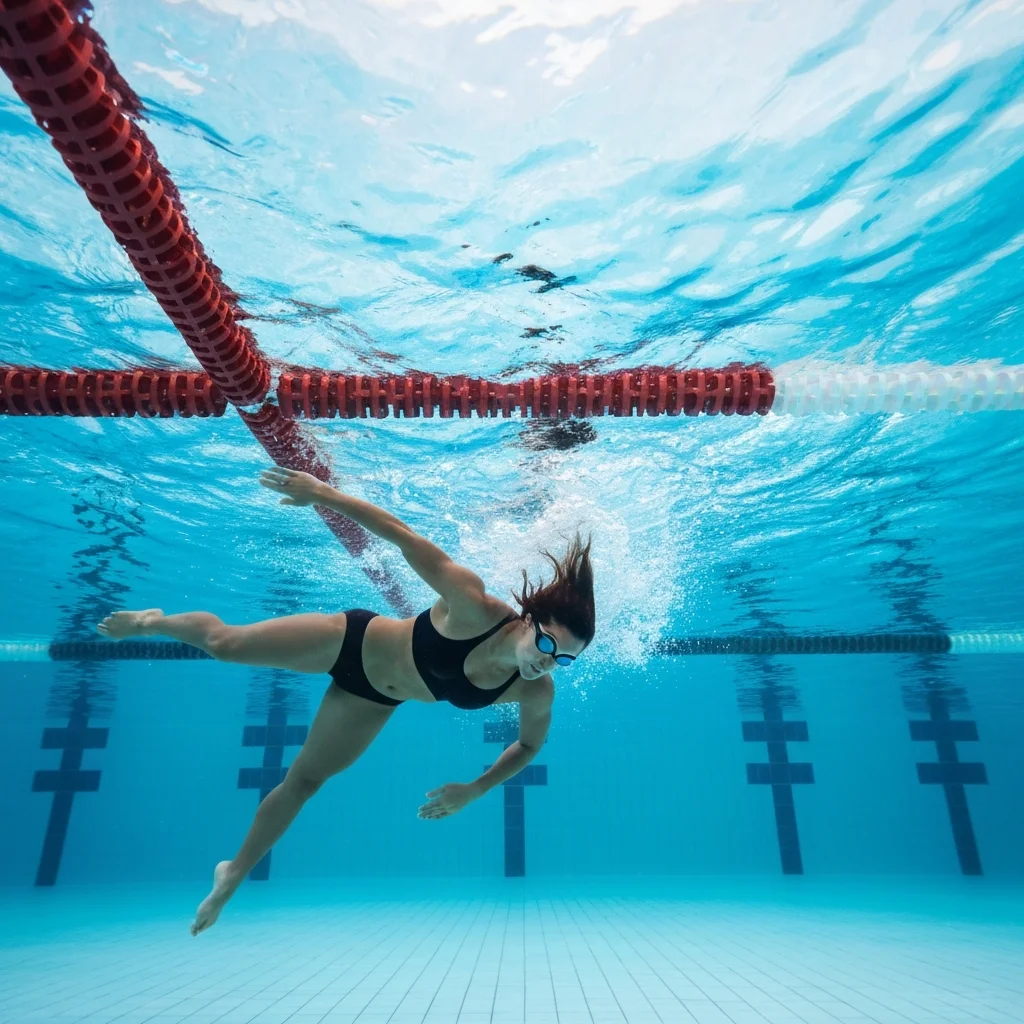
Freestyle (front crawl) is the fastest and most commonly taught swimming stroke. It's also the stroke most swimmers get wrong in subtle ways that cost them speed and energy. This guide breaks down each component of freestyle technique and includes drills to improve each one.
Body Position
Everything starts here. Poor body position creates drag, and no amount of arm strength will compensate for a body that's fighting the water.
- Lie flat and high in the water. Your body should be as close to the surface as possible. Think of pressing your chest slightly into the water, which lifts your hips and legs.
- Head position. Look down and slightly forward, not straight ahead. The waterline should hit around your hairline or the crown of your head. Lifting your head too high drops your hips, creating enormous drag.
- Body rotation. Your body should rotate 30 to 45 degrees to each side with every stroke. This isn't twisting; it's a controlled roll driven by your hips and core. Rotation lets you engage larger muscle groups and reach further with each pull.
Drill: Superman Glide
Push off the wall in a streamlined position: arms extended, head down, legs together. Glide as far as you can without kicking or pulling. Focus on keeping your hips at the surface. If your legs sink immediately, you're not pressing your chest down enough.
The Arm Pull
The arm pull is where most of your propulsion comes from. It has four phases:
1. Entry
Your hand enters the water fingertips first, roughly in line with your shoulder (not crossing the centreline of your body). Reach forward as your hand enters, extending your arm fully before starting the pull. A common mistake is starting to pull too early, which shortens the stroke and wastes energy.
2. Catch
The catch is the moment your hand "grips" the water and begins to pull. Bend your elbow and point your fingertips toward the pool floor, keeping your elbow high. Think of reaching over a barrel. The catch is what separates efficient swimmers from those who just slap the water.
3. Pull
Pull your hand back along your body, accelerating through the stroke. Your hand should travel in a slight S-curve (or straight back, depending on which school of technique you follow). Keep your hand firm but not rigid. Spread your fingers slightly; research shows a small gap between fingers actually increases the effective surface area.
4. Recovery
As your hand exits the water near your hip, bring your arm forward with a high elbow. Your hand should travel close to your body, relaxed, before reaching forward to enter the water again. A relaxed recovery saves energy over long distances.
Drill: Catch-Up
Swim freestyle but don't start pulling with one arm until the other arm has completed its stroke and returned to the front. Both hands "catch up" at the front before the next pull begins. This forces you to complete each stroke fully and develop a proper catch.
Drill: Fingertip Drag
During the recovery phase, drag your fingertips along the surface of the water. This forces a high elbow recovery and keeps your arm relaxed. If your elbow is low, your fingers will dig into the water instead of skimming the surface.
The Kick
The freestyle kick provides balance and some propulsion. For most swimmers, it's more about not creating drag than about generating speed.
- Kick from the hips, not the knees. The motion should originate from your hip flexors, with a slight bend at the knee. Bending your knees too much (bicycle kick) creates drag and wastes energy.
- Keep your feet loose. Pointed toes with relaxed ankles. Stiff ankles reduce the whip-like motion that makes the kick effective.
- Kick size. Small, fast kicks for sprinting. Slower, more relaxed kicks for distance. The kick should stay within your body's "shadow" in the water.
- Two-beat vs six-beat kick. Sprinters typically use a six-beat kick (six kicks per stroke cycle). Distance swimmers often use a two-beat kick (two kicks per cycle, timed with the arm pull) to conserve energy.
Drill: Vertical Kicking
Tread water in the deep end using only your kick (arms crossed over chest). This builds kick strength and forces you to use an efficient kick pattern. If you sink, your kick technique needs work.
Breathing
Breathing is where most beginners struggle and where many experienced swimmers lose efficiency.
- Exhale underwater. Breathe out steadily through your nose and mouth while your face is in the water. When you turn to breathe, all you need to do is inhale. The most common beginner mistake is holding their breath, then trying to exhale and inhale in the brief moment their mouth is out of the water.
- Turn, don't lift. To breathe, rotate your head to the side as your body rolls. One goggle should stay in the water. If you're lifting your head to breathe, your hips drop, your legs sink, and you lose speed.
- Breathe to both sides. Bilateral breathing (every 3 strokes) keeps your stroke balanced. If you only breathe to one side, you'll develop an asymmetric stroke over time. At minimum, practice breathing to your weaker side regularly.
- Timing. Initiate the breath as your pulling arm passes under your body. Your mouth should be out of the water during the mid-pull phase, and back in the water as your arm recovers forward.
Drill: Side Kick
Kick on your side with one arm extended forward and the other resting along your body. Keep your face in the water, breathing by rotating your head upward. This isolates the breathing rotation and helps you find the right head position without the complexity of the full stroke.
Common Mistakes
- Crossing over. Hand enters past the centreline of the body, causing the body to snake through the water. Fix: aim for your hand to enter in line with your shoulder.
- Dropped elbow during the catch. Instead of a high elbow catch, the elbow drops and the hand pushes water down instead of back. Fix: Catch-Up drill with focus on "reaching over the barrel."
- Head too high. Looking forward instead of down. Instantly drops the hips and legs. Fix: look at the black line on the pool floor, not the wall ahead.
- Flat body. No rotation, swimming completely flat. Limits reach and forces reliance on shoulder muscles instead of the larger back and core muscles. Fix: count your rotation, aim for 30 to 45 degrees each side.
- Holding breath. Creates tension and CO2 buildup. Fix: exhale steadily and continuously while your face is in the water.
- Overreaching. Straining to extend the arm past its natural reach. Creates shoulder strain and doesn't add propulsion. Fix: reach comfortably, not maximally.
Putting It Together
Don't try to fix everything at once. Pick one element per session and focus on it. Technique work is best done when you're fresh, at the start of your swim, not after 40 laps when you're tired and your form has deteriorated.
If you're serious about improving, a few sessions with a qualified instructor will give you specific feedback that no written guide can provide. Find instructors in Singapore at SingaporeSwimming.com.