Butterfly Technique: A Complete Guide
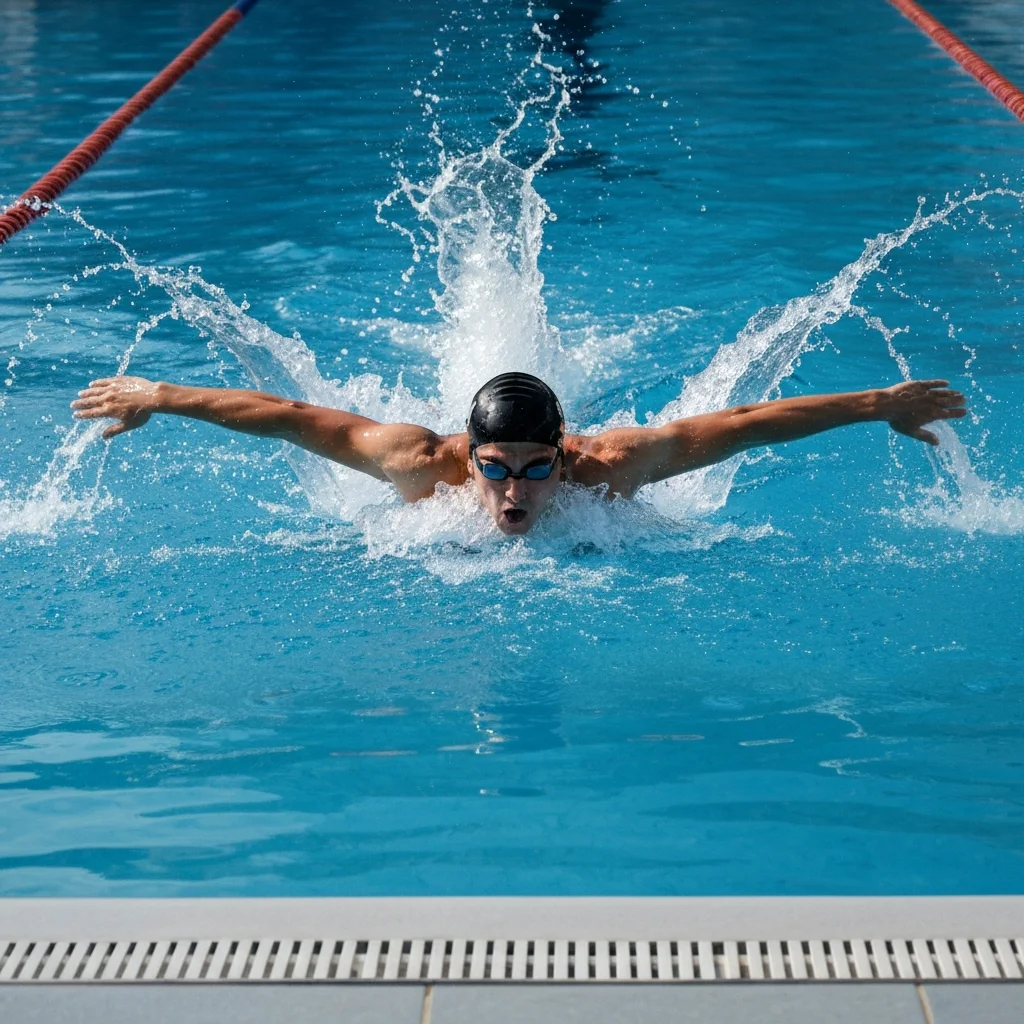
Butterfly is the stroke that intimidates most swimmers. It looks exhausting, and done badly, it is. But efficient butterfly is actually rhythmic and flowing. The secret is that butterfly is driven by your body's undulation, not brute arm strength. Get the body movement right and the rest follows.
The Undulation (Start Here)
Everything in butterfly stems from a wave-like undulation that travels from your chest through your hips to your feet. This is what makes the stroke work. Without it, you're just fighting the water.
- Press your chest down. The movement starts with your chest pressing into the water. This lifts your hips.
- Release your chest. As your chest rises, your hips drop and your legs whip downward. This creates the dolphin kick.
- Think of a wave. The motion flows: chest down, hips up, feet whip. Chest up, hips down, feet recover. It's smooth and continuous, not jerky.
Drill: Body Dolphins
Push off the wall in a streamlined position (arms extended, head between arms). Perform the undulation without any arm pull. Just let the wave travel through your body. Your goal is forward movement using only the body wave. Do this underwater and on the surface. This is the most important butterfly drill and should be part of every warm-up if you're working on butterfly.
The Dolphin Kick
The dolphin kick is a two-leg kick (both legs move together) powered by the body's undulation.
- Two kicks per stroke cycle. The first kick (the "big kick") happens as your hands enter the water. The second kick (the "small kick") happens as your hands push back past your hips. The big kick drives you forward; the small kick lifts your body for the recovery.
- Kick from the core. The kick originates from the chest press and hip movement, not from bending your knees. Your knees bend naturally as part of the whip, but it's not a conscious action.
- Feet together, toes pointed. Both feet move as one unit. Ankles should be loose and floppy, not stiff.
Drill: Vertical Dolphin Kick
In the deep end, hold yourself vertical with arms crossed over your chest. Use only the dolphin kick to keep your head above water. This builds core-driven kick power and teaches you to feel the undulation in a vertical plane.
The Arm Pull
The butterfly arm pull is simultaneous: both arms do the same thing at the same time.
1. Entry
Both hands enter the water simultaneously, shoulder-width apart, thumbs angled slightly down. Arms should be nearly fully extended. This is when the big kick fires.
2. Catch and Pull
Sweep your hands outward slightly, then pull back with high elbows (similar to the freestyle catch). Your hands trace a keyhole shape: out, down, in, back. The pull accelerates through the stroke, finishing with your hands pushing past your hips.
3. Recovery
Both arms exit the water simultaneously near your hips and swing forward over the surface. The recovery should be low, wide, and relaxed. Your arms travel just above the water's surface with loose wrists. Trying to swing your arms high over the water wastes energy and throws off your body position.
Drill: Single-Arm Butterfly
Swim butterfly using one arm only, with the other arm extended in front. Perform the full body undulation and kick, but pull with just one arm. After 25 metres, switch arms. This reduces the physical demand while letting you focus on timing each arm with the kick.
Breathing
- Breathe forward, not up. Your chin should skim the surface as you breathe, not lift toward the ceiling. Lifting too high drops your hips and breaks the undulation.
- Breathe during the pull. As your arms complete the pull phase and push past your hips, your upper body naturally rises. This is when you breathe. Your face drops back into the water as your arms swing forward in the recovery.
- Breathing pattern. Breathe every stroke or every other stroke. For beginners, every other stroke is easier because it keeps the body flatter. As you build fitness and technique, you can move to every stroke.
- Exhale underwater. Same principle as all strokes: exhale while your face is in the water so you only need to inhale when your mouth clears the surface.
Timing (The Critical Part)
Butterfly timing can be summarised as: kick-pull-kick-recover.
- Kick 1 (big kick): fires as your hands enter the water at the front
- Pull: hands catch and pull through the water
- Kick 2 (small kick): fires as your hands push past your hips, lifting your body for the recovery
- Recovery: arms swing forward over the surface while your body resets for the next cycle
The rhythm should feel like: "kick... pull-kick... kick... pull-kick..." with a steady, even tempo. If it feels frantic, slow everything down. Butterfly at a controlled pace is always faster than butterfly at a panicked pace.
Common Mistakes
- No undulation. Swimming flat and relying on arms. The body wave is everything. Fix: spend more time on Body Dolphins drill before adding the arms.
- One big kick instead of two. Missing the second (small) kick makes the recovery nearly impossible. Fix: count "kick-pull-kick" out loud (or in your head) until the two-kick rhythm becomes automatic.
- Arms too high on recovery. Swinging arms up high over the water wastes energy and causes the hips to sink. Fix: keep the recovery low and wide. Your hands should barely clear the surface.
- Breathing up instead of forward. Lifting the head too high to breathe breaks body position. Fix: look forward at the water surface, not at the far wall. Your chin should almost skim the water.
- Knees too bent on the kick. Bending the knees excessively (donkey kick) creates drag and doesn't generate power. The kick comes from the hips and core. Fix: Vertical Dolphin Kick drill to develop the correct movement pattern.
- Asymmetric pull. One arm pulling harder than the other. Causes veering and is a disqualification risk in competition. Fix: Single-Arm Butterfly drill on both sides, paying attention to which side feels weaker.
Building Up to Full Butterfly
Butterfly is physically demanding. If you can't swim 50 metres of butterfly yet, build up gradually:
- Master the body dolphins first. 4 x 25m underwater dolphin kicks, focusing on smooth undulation.
- Add single-arm butterfly. 4 x 25m each arm, with full undulation and kick.
- Swim 3-3-3. Three strokes of right-arm butterfly, three strokes of left-arm, three strokes of full butterfly. Repeat for 25m.
- Short repeats. 8 x 12.5m full butterfly with 20 seconds rest. Focus on technique, not speed.
- Extend gradually. Once 12.5m feels comfortable, move to 25m, then 50m.
Butterfly rewards patience and practice more than any other stroke. Find a qualified instructor for technique feedback at SingaporeSwimming.com.