Benefits of Swimming: Why It's the Best Exercise in Singapore
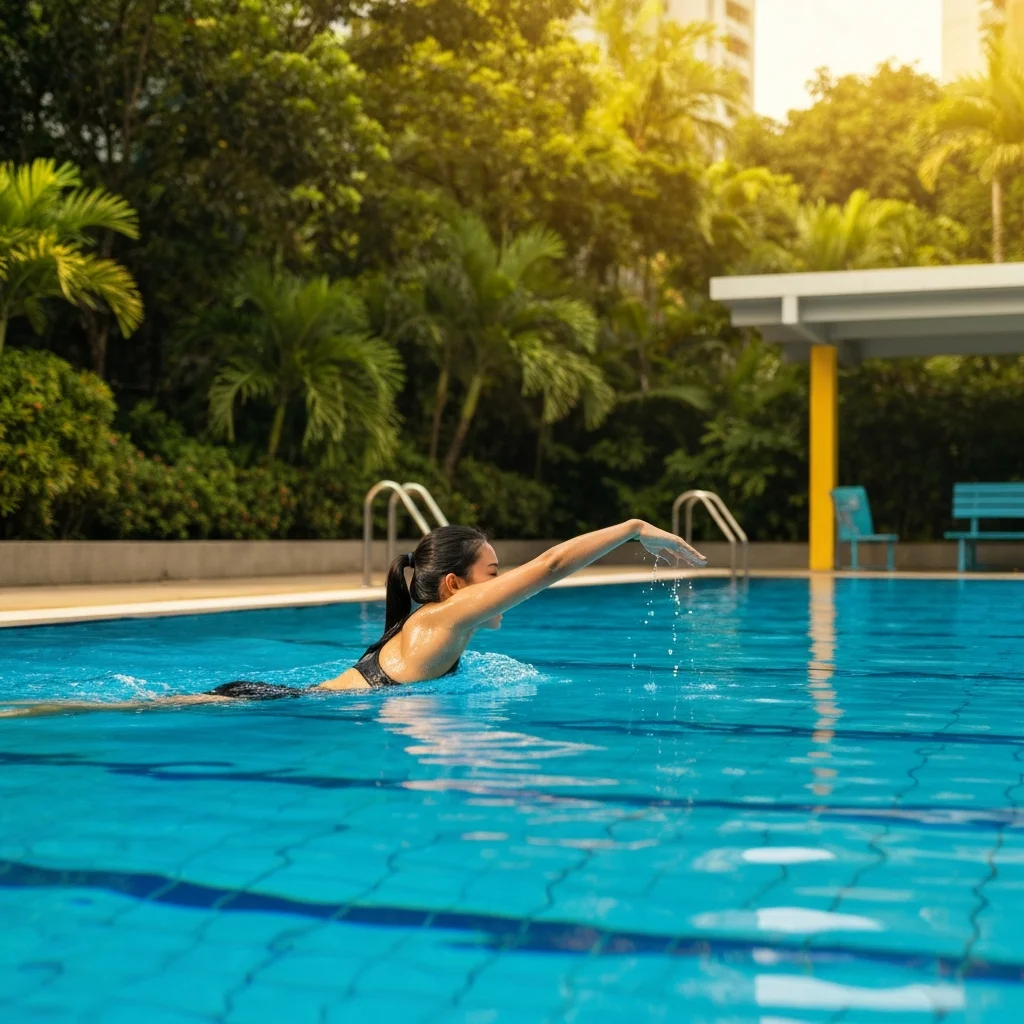
Singapore's climate makes outdoor exercise genuinely uncomfortable for most of the year. Humidity sits above 80% on most days, afternoon temperatures hover around 32 degrees Celsius, and sudden downpours are a regular feature. That's precisely why swimming works so well here. You're already wet, the water keeps you cool, and most public pools stay open rain or shine.
But the benefits of swimming go well beyond beating the heat. It's one of the few exercises that works your entire body while being gentle on your joints, and you can do it whether you're 8 or 80.
Physical Benefits
Full-body workout without the impact
Swimming engages every major muscle group. Freestyle alone works your shoulders, back, core, hips, and legs in a single stroke cycle. Unlike running or basketball, the buoyancy of water supports your body weight, reducing stress on joints by up to 90%. A grandmother and her grandchild can share a lane and both get a real workout.
Cardiovascular fitness
Regular swimming strengthens the heart and lungs. A 2016 study published in the British Journal of Sports Medicine found that swimmers had a 28% lower risk of early death and a 41% lower risk of death from heart disease compared to non-exercisers. These numbers were comparable to running, but with far less wear on the body.
Calorie burn
A 70kg person swimming moderate-pace freestyle for 30 minutes burns approximately 250 calories. That's similar to jogging but without the impact on knees and ankles. Breaststroke and butterfly burn even more due to the greater resistance involved.
Flexibility and range of motion
The reaching, stretching, and rotating involved in swimming strokes naturally improve flexibility over time. Backstroke in particular opens up the chest and shoulders, countering the effects of desk work and phone use.
Muscle tone without bulk
Water provides constant resistance in every direction, which builds lean muscle. Swimmers tend to develop long, toned muscles rather than the bulk associated with weight training. The resistance is also self-adjusting: the harder you push, the more the water pushes back.
Mental Health Benefits
Stress reduction
Swimming laps puts your brain into a repetitive loop: stroke, breathe, stroke, breathe. Your attention narrows to the water and your body. Research from the University of Exeter found that being in or near water reduces stress hormones and increases feelings of wellbeing. Many regular swimmers say their best thinking happens in the pool, or that they simply stop thinking altogether -- which is the point.
Better sleep
Moderate aerobic exercise like swimming has been shown to improve sleep quality, particularly for adults over 40. The physical exertion combined with the cooling effect of water helps regulate body temperature, which signals the body to prepare for sleep.
Social connection
Swimming doesn't have to be solitary. Masters swimming groups, aqua aerobics classes, and even casual lane-sharing create social connections. In Singapore, the public pool is a community space where regulars recognise each other and friendships form naturally.
Benefits Specific to Singapore
Year-round availability
With over 25 ActiveSG swimming complexes across the island, there's almost certainly a public pool within a short bus ride. Entry costs just $1 for adults. Many complexes are open from 6:30am to 9:30pm, making it possible to swim before work, during lunch, or after dinner.
Heat-proof exercise
In a country where outdoor running between 11am and 4pm is genuinely risky due to heat, swimming provides an exercise option that keeps your core temperature regulated. This is particularly important for older adults and people with heat sensitivity.
Water safety in an island nation
Singapore is surrounded by water. Reservoirs, the sea, and water features are part of daily life. Knowing how to swim isn't just about fitness; it's a practical safety skill. The SwimSafer programme, run through schools, reflects this national priority.
Low cost, high accessibility
At $1 per entry to a public pool, swimming is one of the cheapest forms of exercise available in Singapore. Compare that to gym memberships ($80 to $200+ per month), fitness classes ($20 to $40 per session), or sport-specific facilities. All you need is a swimsuit and goggles.
Who Benefits Most
- Office workers who sit all day. Swimming counteracts the hunched posture and tight hip flexors that come with desk work.
- Older adults looking for joint-friendly exercise. The buoyancy of water makes movement easier while still providing resistance for strength.
- People recovering from injuries. Physiotherapists frequently recommend pool-based exercise for rehabilitation because it allows movement without load-bearing stress.
- Parents who want exercise they can do alongside their children. Many public pools have teaching pools and wading pools next to the main lap pool.
- Anyone dealing with stress or anxiety. The physical effort, the breathing rhythm, and the feeling of being in water all work together. It's hard to ruminate about work when you're counting strokes.
Getting Started
If you already know how to swim, the barrier to entry is almost zero. Find your nearest public pool via SwimmingComplex.com, bring your swimsuit and goggles, pay $1, and start with whatever distance you can manage. Even 10 to 15 minutes of continuous swimming is a worthwhile workout for beginners.
If you're learning from scratch, our guide to adult swimming covers what to expect from lessons, typical costs, and tips for getting started.
The best exercise is the one you'll actually do. In Singapore's heat, swimming has a clear edge: it's the one workout where the climate is an asset, not an obstacle.